|
Istanbul, the only city in the world
built on two continents, stands on. both
shores of the Istanbul Bogazi (Bosphorus)
where the waters of the Black Sea mingle
with those of the Sea of Marmara. The
Golden Horn divides European Istanbul in
two. Here on this splendid site,
Istanbul guards the precious relics of
three empires, of which she has been the
capital; a unique link between East and
West, past and present.
However, Istanbul is not only historic,
it is also a magnificent city that is
fascinating and vividly alive. Beneath
the unchanging skyline of her domes and
minarets there is the continual bustle
and movement of crowds, the rumbling of
vehicles along andent cobblestone
streets, the incessant coming and going
and the cries of street sellers mingling
with shipping sounds from the busy port.
Istanbul has endless variety: museums,
andent churches, palaces, great mosques,
bazaars and the Istanbul Bogazi (Bosphorus).
However long you stay, whether for just
a few days or longer, your visit to this
eclectic city will be unforgettable.
Topkapi Palace:
Overlooking the Istanbul Bogazi and the
Marmara Sea stands amaze of buildings
that was once the great palace of the
Ottoman sultans from the 15th to the
I9th centuries. The first courtyard is a
magnificent wooded garden. To the right
of the second court, shaded by cypress
and plane trees is the palace kitchen,
now housing an exquisite collection of
crystal, silver, and Chinese porcelain,
while on the left is the Harem, the
secluded quarters of the wives and
concubines of the sultan. The third
court contains the Audience Hall of the
sultan, the Library of Sultan Ahmet III,
an exhibition of robes worn by the
sultans and their families, the famous
jewels of the Imperial Treasury' and
finally, an exhibition of miniatures. In
the center of the third court is the
Pavilion of the Holy Mantle, enshrining
relics of the Prophet Mohammed. (Open
every day except Tuesday.)
Dolmabahce Palace:
Built in the mid-19th century by Sultan
Abdulmecit, it has an impres- sive 600-meter
frontage on the Istanbul Bogazi. The
most important part is the vast
reception salon, with 56 columns and a
huge 750-bulb crystal chandelier
weighing 4,5 ions. The architecture of
the Harem is in stark contrast to that
of the rest of the palace. The Bird
Pavilion, where birds from all over the
world were once kept is unique to this
palace. Ataturk, the founder of the
Turkish Republic, died here on November
10. 1938. (Open every day except Monday
and Thursday.)
Beylerbeyi Palace: On
the Asian side of the Istanbul Bogazi,
this palace was built of white marble by
Sultan Abdulaziz in the 19th century. It
possesses a beautiful garden with mag-
nolia trees and was used as a summer
residence of the sultans and as a guest
house for visiting foreign dignitaries.
(Open every' day except Monday and
Thursday.)
Yildiz Palace: This
palace includes a complex of pavilions
and a mosque which were built over a
long period and finally completed by
Abdulhamit II at the end of the 19th
century, The Sale, the largest and most
exquisite of the buildings, reflects the
life of luxury of over a century ago.
Yildiz Palace is set in a huge park with
plants and trees brought from ever}'
part of the world. Situated on the top
of a hill. it has one of the most
beautiful panoramic views of the
Istanbul Bogazi. At present only the
Sale and park are open to the public.
(Open every day except Monday and
Thursday.)
Sultanahmet Imperial Mosque
(Blue Mosque): Across from St.
Sophia is the supremely elegant,
imperial, six-minaret mosque of
Sultanahmet I. Built between 1609 and
1616 by the architect Mehmet, it is
known as the Blue Mosque because of its
magnificent interior decoration of blue
Iznik tiles. During the summer months,
there is a light and sound show in the
evening.
Suleymaniye Imperial Mosque:
The mosque of Suleyman the Magnificent,
where he and his wife, Hurrem Sultan (Roxelane),
are buried, is considered the most
beautiful of all imperial mosques in
Istanbul. It was built between 1550 and
1557 by the famous architect Sinan whose
wish was to surpass the builders of St.
Sophia. Erected on the crest of a hill,
it is con- spicuous from its great size,
emphasized by the four minarets rising
one from each comer of the courtyard.
Inside, the mihrab (prayer niche showing
the direction to Mecca) and the mimber (pulpit)
are of finely carved white marble, and
there are fine stained glass windows,
Adjoining the mosque were theological
schools, a school of medicine, a soup
kitchen and hospice for the poor, a
caravanserai and a Turkish bath.
Rustem Pasa Mosque:
Another skillful accomplishment of the
architect Sinan, this mosque was built
in 1561 on the orders of Rustem Pasa,
Grand Vizier and son-in-law of Suleyman
the Magnificient. The exquisite interior
is covered with some of the finest
examples of Iznik tiles.
Imperial Fatih Mosque:
This imperial mosque, constructed
between 1463 and 1470, hears the name of
the conqueror of Istanbul, Fatih Sultan
Mehmet, and Is the site of his
mausoleum. Standing on top ol one of the
hills of Istanbul, it is notable for its
vast size and the great complex of
religious buildings surrounding it:
theological schools, hospices, a
hospital, baths, a caravanserai and a
library.
Eyup Mosque: The Great
Mosque of Eyup is situated outside the
city walls near the Golden Horn where
Eyup, standard-bearer of the Prophet
Mohammed, died in an assault on
Constantinople in 670 A,D. His tomb is
greatly venerated and attracts many
pilgrims. This was the first mosque
built after the Ottoman conquest of
Istanbul,
Yeni Mosque: Built
between 1597 and 1663, this mosque,
located at Eminonu, is one of the best
known sights of Istanbul. An elegant
fountain for ritual ablutions stands in
the large courtyard and the sultan's
section is decorated with marvelous
Iznik tiles.
Sokollu Mehmet Pasa Mosque:
This 16th-century mosque,
contructed on the slope of a hill below
Sultanahmet Square, is one of the most
beautiful examples of classical Turkish
architecture and is a masterpiece of the
architect Sinan. The pulpit and prayer
niches are of special interest being
covered with beautiful Iznik tiles.
Mihrimah Sultan Mosque (Edirnekapi):
This mosque was also designed by Sinan
and built in 1555 by Mihrimah Sultana,
the daughter of Suleyman the Magnificent,
This majestic mosque has 161 windows (some
with stained glass) in three rows on
each side, filling this mosque with an
abundance of light.
Ayasofya Museum (Saint Sophia):
This ancient basilica, built by
Constantine the Great in the 4th century
and reconstructed by Justinian in the
6th century, is one of the architectural
marvels of all time- Its immense dome
rises 55 meters above the ground and is
31 meters in diameter. The beautiful
decorations include stunning Byzantine
mosaics. (Open everyday except Friday.)
Kariye Museum: The
1th-century church of "St. Saviour" in
Chora is, after St. Sophia, the most
important Byzantine monument in
Istanbul. The walls are decorated with
superb 14th century frescoes and mosaics
on a gold background. The church is a
remarkable museum of Byzantine an that
influenced the European Renaissance,
Here you will find a quiet, carefully
tended garden facing old wooden houses
where you can enjoy tea or coffee. (Open
ever day except Tuesday.)
Yerebatan Sarnici:
Close to St. Sophia 1s the 6th-century
Byzantine cistern known as the Yerebatan
Sarnici, Fine brick vaulting is
supported by 336 Corinthian columns.
(Open everyday except Tuesday.)
Archeological Museums:
These are situated on the perimeter of
the first court of Topkapi Palace. The
very rich collection of classical
antiquities in the Archeological Museum
includes the celebrated Alexander
Sarcophagus, and the Athena Temple from
Assos. The Museum of the Ancient Orient
displays antiquities from the Sumerian,
Babylonian. Assyrian, Haiti and Hittite
civilizations, (Open everyday except
Monday.)
Cinili Kosk (The Museum of
Turkish Ceramics): This kosk,
or pavilion, was built by Mehmet the
Conqueror in the 15th century. It
contains beautiful Iznik tiles from the
16th century and fine examples of Seljuk
and Ottoman tiles and ceramics. (Open
everyday except Monday).
St. Irene Museum: St.
Irene was the first church in Istanbul
built by Constantine in the 4th century
and rebuilt by Justinian. It is
reputedly the site of a pre-Christian
temple (Open everyday except Monday but
by appointment only.)
Ibrahim Pasa Palace: (The
Museum of Turkish and Islamic Art) Built
in 1524 by Ibrahim Pasa, Grand Vizier of
Suleyman the Magnificent, it was the
grandest private residence ever built in
the Ottoman Empire. It is now used as a
museum for many beautiful Turkish and
Persian miniatures, Seljuk tiles. Korans
and antique carpets. (Open everyday
except Thursday.)
Military Museum: The
exhibits from Ottoman military history
include the great field tents used on
campaigns. There are performances by the
Mehter Takimi (the Ottoman military band)
between 3:00 and 4:00 p.m. (Open
everyday except Monday and Tuesday.)
Sadberk Hanim Museum: A
charming museum housed in two restored
wooden villas.The museum is dedicated to
old Turkish arts and handicrafts and
includes an archeological section, It is
situated on the Istanbul Bogazi at
Buyukdere. (Open everyday except
Wednesday.)
Museum of Fine Arts:
Located in Besiktas, it is one of the
best museums in Turkey for paintings and
sculptures from the end of the 19th
century to the present. (Open everyday
except Monday and Tuesday.)
Museum of Turkish Carpets:
A museum near the Sultanahmet
Mosque which contains a fine collection
of Turkish carpets and kilims, including
some very old ones. (Open everyday
except Sunday and Monday.)
Mosaic Museum: This
museum was built to preserve "insitu"
the exceptionaly fine mosaic pavements
from the 5th and 6th centuries which "
were in the Great Palace of The
Byzantine" Emperor. (Open everyday
except Monday.)
Sehir (City) Museum:
This museum houses a collection of
objects dating from the Turkish conquest
of Istanbul to the present day. The
entrance is by the Yildiz Palace Garden.
(Open everyday except Thursday.)
Yildiz Palace Theatre and the
Historic Stage: Costumes Museum
with their rich scenery, full- size
stage and exquisite costumes, are
located within the garden of the palace.
(Open everyday except Monday.)
Museum of Industry (Rahmi Koc
Industry Museum): Located in
the suburb ol Haskoy on the coast of the
Golden Horn, this 18th-century Ottoman
iron and steelworks building (formerly
known as Lengerhane, "iron works"), has
exhibits tracing industrial development.
(Open every day except Monday).
Caricature Museum: This
museum in the Fatih quarter is in the
16th-century Gazanler Aga Medrese. (Open
weekdays 09:00-18:00).
Sultanahmet Square: In
front of the Blue Mosque is the site of
the ancient Hippodrome, the scene of
chariot races and the center of
Byzantine civic life. Of the monuments
which once adorned it, only three remain:
the Obelisk of Theodosius, the bronze
Serpentine Column and the Column of
Constanline. Remains from the curved end
of the Hippodrome wall can be seen to
the south of the these three monuments.
Today, it is the center of historical,
cultural and touristic activities. The
square, with its surrounding area.
resembles an open-air museum. The 18th-century
houses on Sogukcesme Street,
delightfully restored, are now guest
houses for tourists and also contain a
fascinating library of books on Istanbul.
Ahmet III Fountain:
Situated at the entrance to Topkapi
Palace and built in 1729 as a gift to
Ahmet III. it is one of the most
magnificent free standing fountains.
Highly ornamented and covered with a
generous pointed roof, it is a fine
example of fountain architecture.
Rumeli Hisari: The
Rumelian Fortress, built by Mehmet the
Conqueror in 1452 prior to the conquest
of Istanbul, was completed in only four
months, and is one of the most beautiful
works of military architecture anywhere
in the world. Its amphitheater is now
used as the setting for some ol the
events in the Istanbul Music Festival, (Open
every day except Mondays.)
Galata Tower: This huge
tower, built by the Genoese in 1348 is
62 meters high. From the lop, there is a
wonderful view of the Golden Horn and
the Istanbul Bogazi. It has houses, a
restaurant, nightclub and bar now.
Beyazit Tower: Located
on the grounds of Istanbul University,
it was built by Mahmut 11 in 1828 as a
fire lower, and is 85 meters high.
The Istanbul Walls:
Built in the 5th century by the Emperor
Theodosius II, the walls (with some
sections completely restored) stretch 7
km from the Sea of Marmara to the Golden
Horn. With many towers and bastions,
they were once the mightiest
fortifications in Europe. UNESCO has
declared die walls and the area which
they enclose cultural heritages of the
world.
Bozdogan-Valens Aqueduct:
Built by the Emperor Valens in
368 A,D., this aqueduct supplied first
the Byzantine and later the Ottoman
palaces with water. About 900 meters of
the doubletier arches remain.
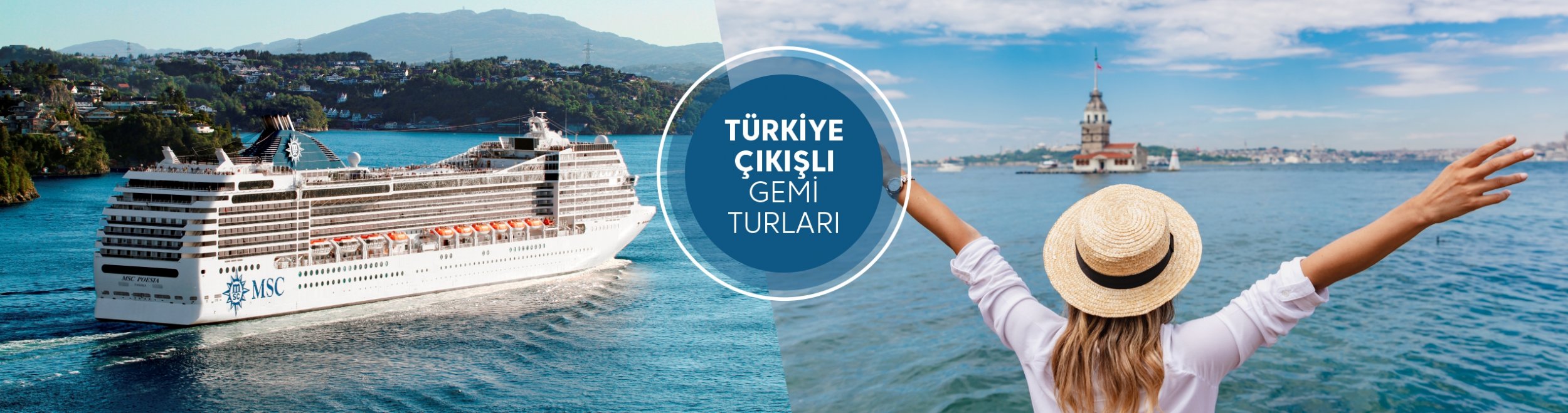
Kiz Kulesi (The Tower of Leander):
Kiz Kulesi is one of the romantic
symbols of Istanbul. First constructed
in the 12th century on a tiny islet at
the entrance to Istanbul Harbor, the
present building dates from the 18th
century. |